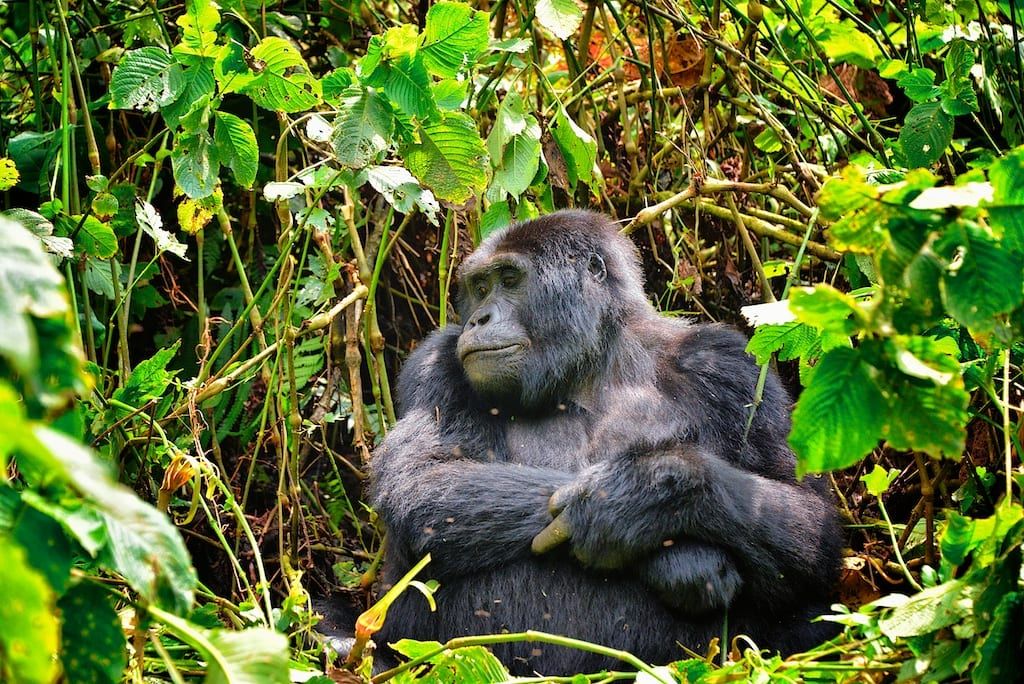
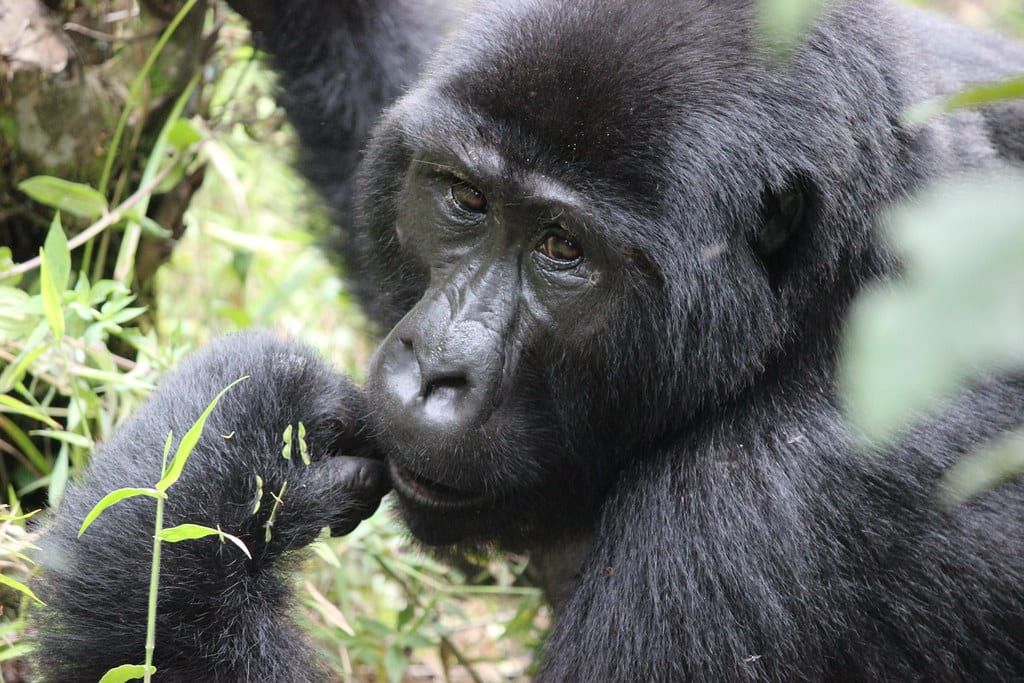
Bwindi Impenetrable National Park in south-western Uganda protects roughly 459 mountain gorillas — close to half of all that remain on Earth — and trekking to see them runs every month of the year. The park never closes. What changes through the year is how muddy the trails are, how far the gorillas roam before you find them, how hard permits are to get, and how much the lodges charge. That's the whole timing question in one sentence.
Here's the verdict up front, followed by the numbers behind it: a season-by-season breakdown, a month-by-month rating with the reasoning, current permit costs, and how your chosen sector changes the weather equation.
The Short Answer: Best Time to Visit Bwindi
Plan around June to August or December to February. These are Bwindi's two drier periods, when forest trails are firmer and less slippery, the murram access roads are at their most passable, and photography conditions are at their best. June and July receive the lowest rainfall of any month in the park, which is why they anchor the classic recommendation.
Three labels get used interchangeably here, and they shouldn't be. Best weather means June–July. High season runs June to September plus the mid-December festive rush — that's about demand, not rainfall, and it's when permits sell out furthest ahead. Best time for you may be neither: if you're watching costs or chasing birds, the wet seasons of March–May and September–November are genuinely the smarter booking, for reasons the sections below unpack.
One caveat before anything else. Bwindi is a rainforest, and rain falls in every month of the year. There is no window where you can leave the rain jacket at the lodge. The dry seasons simply mean fewer hours of it underfoot.
Bwindi's Climate: Rain, Altitude and Temperatures
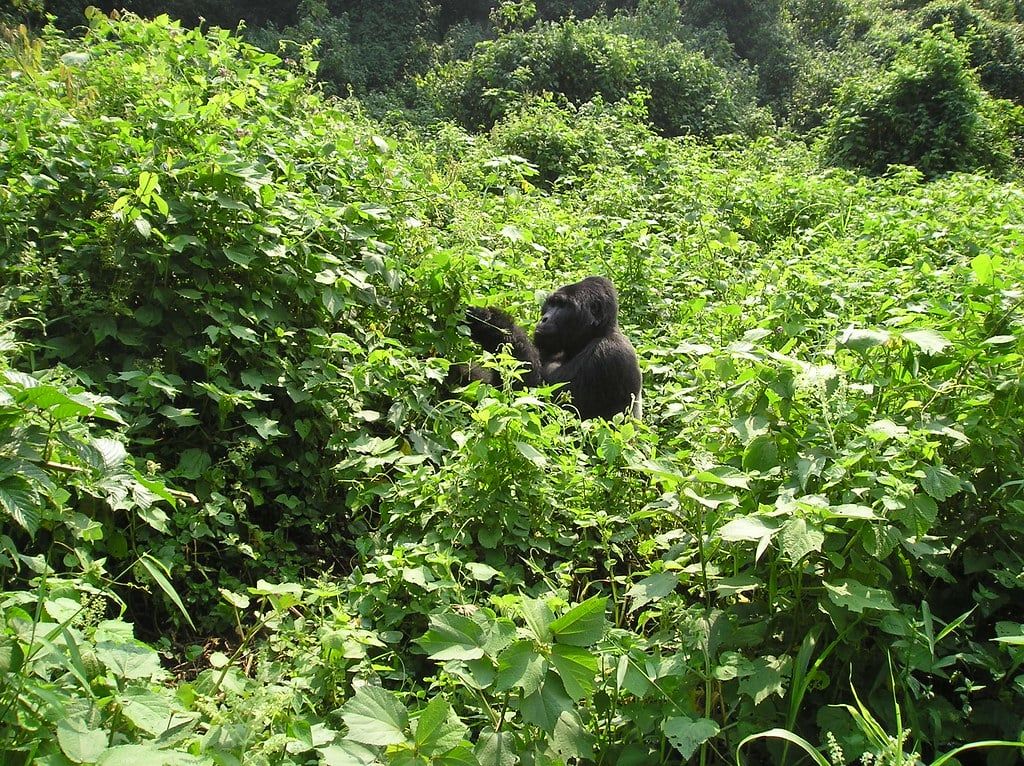
Bwindi sits on the equator, so it has no summer or winter — just an alternation of wet and drier periods. Annual rainfall runs between 1,400 and 1,900 mm, peaking around March–April and again from September through November. The drier spells fall between them: June to August, and December to February. "Drier" is relative. A short, heavy downpour can arrive on any afternoon of any month, including August.
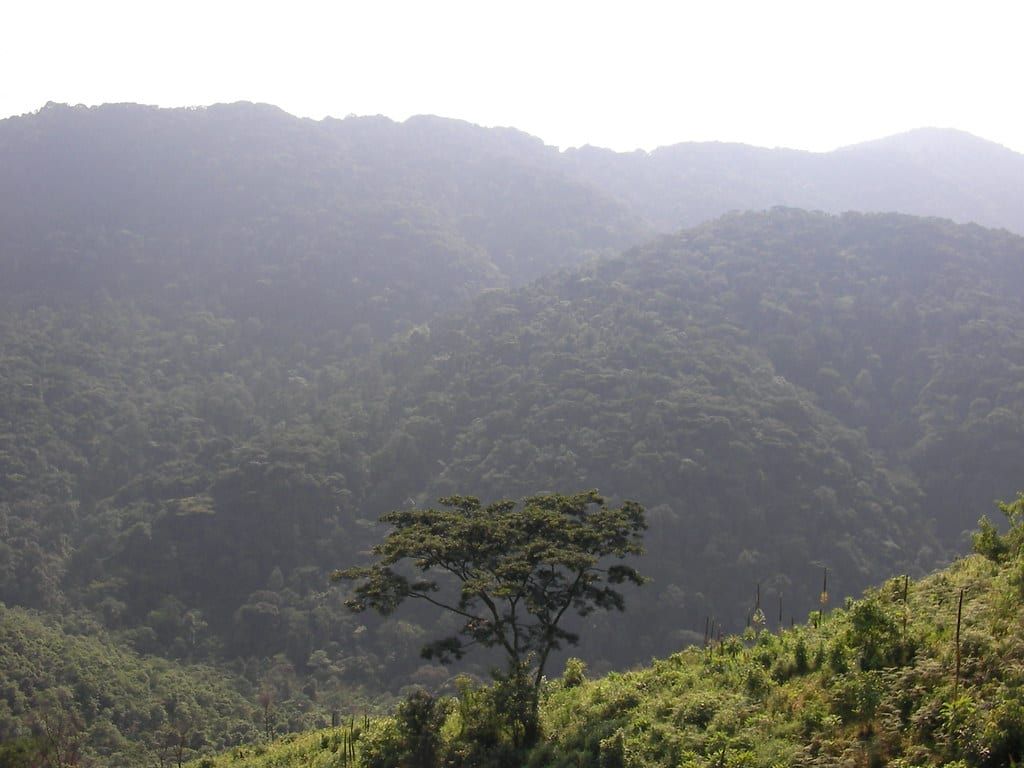
Altitude shapes everything else. The park climbs from 1,160 m to 2,607 m above sea level, and the four trekking sectors sit at different points on that slope — which is why a Ruhija morning can feel ten degrees colder than a Buhoma one on the same day. Daytime temperatures hover around 23°C, dropping to roughly 11°C at night, with annual means ranging from a 7–15°C minimum to a 20–27°C maximum. Mornings above 2,000 m are properly cold before the treks set off at about 8:30 am.
Humidity is constant, the undergrowth is dense and nettle-strewn, and the vegetation is more than 25,000 years old. The practical takeaway: dress for a cold, wet morning that turns warm and sweaty within an hour of walking.
Dry Season vs Wet Season Compared (and What to Pack Either Way)
| Dry season (Jun–Aug, Dec–Feb) | Wet season (Mar–May, Sep–Nov) | |
|---|---|---|
| Trails | Firmer underfoot, easier river crossings | Steep, muddy, slippery; some roads need 4x4 |
| Photography | Clearer vegetation, but hazy views | Dense foliage and mist — moody forest shots |
| Trek length | Longer; gorillas roam farther for food | Shorter; gorillas feed on lower slopes |
| Crowds and permits | Peak demand; book 12–18 months ahead | Few visitors; permits easier to secure |
| Lodge rates | Peak pricing | Off-season discounts at many lodges |
| Birding | Good | Best — breeding birds and migrants |
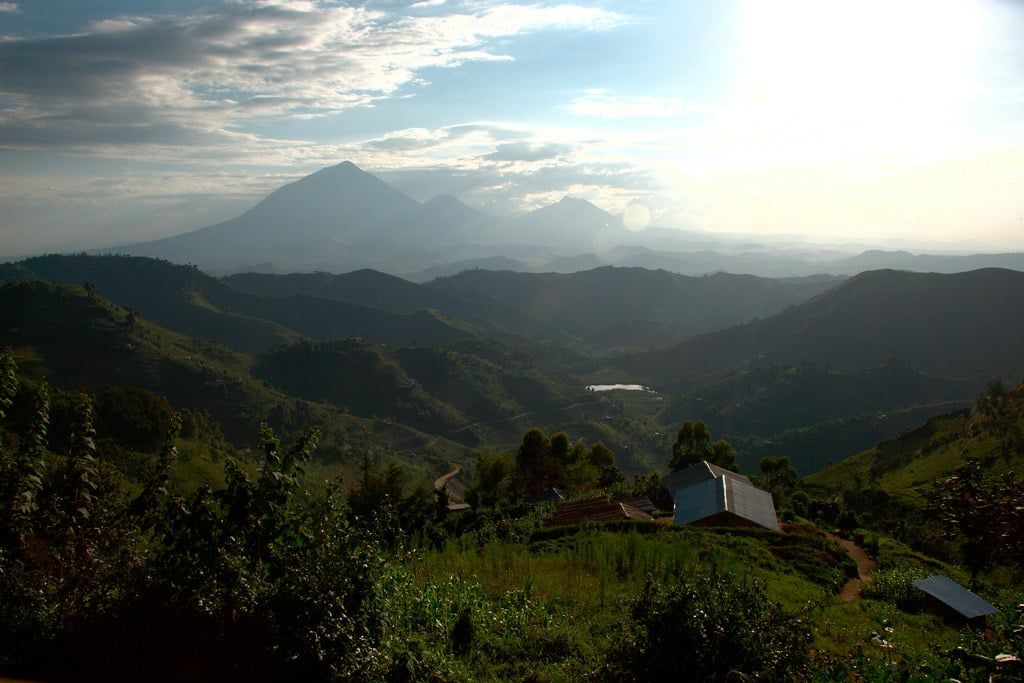
The photography trade-off deserves a line, because it cuts both ways. Dry season opens up the vegetation so you can actually see the gorillas through it, but the air is hazy and the views from Nkuringo's ridge over the Virunga volcanoes lose their punch. Wet season gives you mist-soaked forest and saturated greens — gorgeous if you like moody images, frustrating if a downpour arrives during your one hour with the family. Carry a rain cover for your camera regardless.
The kit list barely changes between seasons, which is the point. Rain gear is not optional in any month.
- Waterproof hiking boots with real grip
- Gaiters and gardening gloves for vegetation
- A rain jacket, worn or packed, always
- A warm layer for cold sector mornings
- A dry bag and spare batteries for cameras
- A porter (US$10–25) — worth it in every season
In the rains, add trekking poles and accept that some access roads require a 4x4 rather than merely recommend one. The porter is the item people skip and regret: for US$10–25 they carry your daypack, haul you up the steep pitches and hand you down the slick ones, and the fee goes straight to a local family — including reformed poachers.
Dry Season (June–August & December–February): Pros, Cons and Who It Suits
The long dry season, June to August, is Bwindi at its most manageable. Trails are firmer, the two drier months of the calendar fall inside it, and driving in from Kabale or Kisoro is at its least punishing. The cost is company: this window coincides with peak East African safari season, permits sell out furthest ahead — planners at some operators report 12–18 months for these dates — and lodges charge their top rates. Mornings are the coolest of the year at altitude, which most trekkers count as a plus.
December to February is the short dry season, and it's a different animal. Mid-December onwards sees the rains ease to light showers, and holiday travel stacks demand into the Christmas fortnight in exactly the way June–August does. January and February, though, are usually fairly dry and far quieter — a period many travellers wrongly assume is low season. If your dates are flexible, late January is one of the park's quietest good-weather bets.
There's a trade-off hiding in the dry months. With less fruit and foliage close to the trails, gorillas move longer distances in search of food, so dry-season treks are often the more strenuous ones — the classic 2–8-hour range tends toward the top end. The vegetation is clearer for photography, which partly compensates.
Who the dry season suits: first-time trekkers nervous about the terrain, families locked into school holidays, and anyone turning the trip into a milestone. If seeing the gorillas comfortably matters more than saving money, book June–July — and book it early, including your overnight lodge matched to your sector, since the good rooms go the same way permits do.
Wet Season (March–May & September–November): Pros, Cons and Who It Suits
The wet seasons are real work but real value. March to May is the long rains — the wettest stretch of the year, when steep trails turn genuinely treacherous and unpaved access roads reach their worst. September to November is the short-rains version: heavy at both ends, with late September often still carrying dry-season conditions. That difference matters if you're choosing between them.
Here's the compensating mechanics. In the rains, gorillas feed on the lower slopes close to the park boundary, near the trailheads — so treks get shorter, sometimes much shorter. Guides have reported October–November treks finishing in under two hours, and some wet-season groups are back by 11 a.m. after setting off at 8:30. You'll work harder per metre of trail, but you'll cover fewer of them.
This is also where the cheapest-time question gets its answer. The wet-season months are quiet, many lodges cut their rates, and permits are far easier to secure — a few months' notice instead of more than a year. Some lodges close for renovation during the long rains, but plenty stay open and discount. Add the year's best birding and you have a package that suits budget travellers, serious birders and photographers who want mist-wrapped forest rather than clear vistas. Solitude seekers, too: on a November trail you can have the forest almost to yourself.
What you must accept: slippery climbs, dense vegetation between you and the gorillas, and travel logistics — small aircraft connections and rural roads — that are more vulnerable to delay. Build a buffer day into any wet-season itinerary.
Bwindi Month by Month
Month ratings below follow the widely used SafariBookings scale — Excellent, Good, Fair, Poor — but with the reasoning attached, because a bare letter grade tells you nothing about why April is hard or why September is underrated.
January–February: Excellent
The tail of the short dry season. Trails are usually firm, permits are noticeably easier to get than in June, and lodges are calmer after the festive rush — the paradox being that this stretch is often talked of as low season when the trekking is close to peak form. Best for travellers who want dry-season conditions without dry-season crowds.
March–May: Fair to Poor
The long rains. April and May are the wettest months in the park, with March rated merely fair as the rains build. Trails are at their muddiest, roads are at their worst, and transfers slow down. In exchange: the year's lowest lodge rates, the shortest treks, and the forest at its loudest with birdsong. Budget travellers should look straight at April and May; everyone else should look away.
June–August: Excellent
June and July are the driest months on the calendar and rate Excellent; August is a step behind at Good as the first rains tease the edges. This is peak season in every sense — prime trails, sell-out permits, top lodge rates, the fullest trailheads. Book furthest ahead for these months, ideally a year or more for the permit and the room together.
September: Fair — the Underrated One
Guides describe September as a sweet spot, and the ratings undersell it. Early in the month you often get near dry-season conditions on the trails with demand a notch below the June–July frenzy, because the family-holiday wave has gone home. The short rains build through late September. The play: aim for the first half of the month and treat the Fair rating as noise.
October–November: Poor
The short rains at full strength. Mud, mist, dense vegetation and moody light — rated Poor for comfort, though photographers and birders quietly rate it higher. Treks are the year's shortest, with the gorillas feeding low, and some groups are done before lunch. Lodge discounts are at their deepest.
December: Good
A split month. Early December carries the tail of the short rains; by mid-month the rain eases to light showers and conditions approach the good side. Festive demand stacks the Christmas fortnight with peak-season crowds and pricing, so a mid-December arrival is a genuinely viable alternative Christmas window — if you've booked it far enough ahead.
Gorilla Permits: Costs, Availability and Booking Timelines by Season
Permits cost the same in every month — the seasons change availability, never price. Under the current UWA conservation tariff, which runs to June 2026, the fee structure is fixed:
| Traveller category | Standard trek permit | Habituation experience |
|---|---|---|
| Foreign non-resident | US$800 | US$1,500 |
| Foreign resident | US$700 | US$1,000 |
| Rest of Africa | US$500 | US$1,000 |
| East African citizens | UGX 300,000 | UGX 750,000 |
Supply is the real constraint. Each habituated gorilla family takes a maximum of 8 trekkers per day — roughly 20 families are habituated across the four sectors, so fewer than 200 permits exist for any given morning. The permit covers that day's park entrance, the guide fee, a community contribution and your tracking certificate. It's tied to one sector and one date, so the rest of your trip has to be built around it. Book through the UWA reservations office in Kampala or a licensed operator; a US$50–100 operator surcharge is common and, in peak season, worth paying for the allocation.
Lead times follow the seasons. For June–August and mid-December dates, work on 12 months minimum and up to 18 to be safe — permits and lodges sell out in step. For wet-season dates, 3–6 months is usually comfortable. If you'd like a fuller walkthrough of the day itself, from the 7:30 briefing to the one-hour rule, our gorilla trekking guide covers it end to end.
The trek-day rules are season-proof: minimum age 15, a maximum of 8 visitors per group, one hour with the gorillas, 10 metres' minimum distance and no flash photography. Tell the rangers your fitness at the morning briefing — they can assign you a gorilla family closer to the trailhead, which matters more in the wet months when the far families are a serious hike.
Choosing a Sector: How Timing and Trailhead Interact
Where you trek changes how the weather hits you, and almost nobody factors this in. Bwindi's four sectors sit at different altitudes on a slope that climbs from 1,160 m to 2,607 m. Buhoma, in the north, is the lowest and most gentle — the sector to pick if you're trekking in the rains and want the most forgiving terrain, and the one seniors most often use. Ruhija, on the eastern side, is the highest and coldest, and the base for the park's best birding trails. Rushaga and Nkuringo, in the south, are the ridge country: steep climbs in and out of valleys, hardest of all when wet — but Nkuringo delivers the park's most dramatic scenery, with views over the forest canopy to the Virunga volcanoes on the Rwanda–DRC border.
Getting there splits along the same north–south line. Scheduled light aircraft fly from Entebbe to Kihihi, serving Buhoma and Ruhija (about 80 minutes, then roughly 80 minutes by road to the Buhoma gate), or to Kisoro for Rushaga and Nkuringo, from around US$333 one-way. Kisoro flights leave in the mornings only, so a missed departure costs a day. Driving in from Entebbe is a long haul — 8–10 hours, with the last stretch on murram from Kabale that turns to 4x4 territory in the rains — and our transport and routes guide covers the options, including the 3–4-hour shortcut via Kigali that many trekkers now prefer.
Small aircraft and wet weather don't mix well: flights get delayed when the valleys are socked in, another reason to keep a buffer day in any wet-season plan. Permits, meanwhile, aren't evenly contested — Buhoma and Ruhija draw the heaviest demand, while Nkuringo and Rushaga permits can be easier to secure in months when the north is sold out. Rushaga also hosts the habituation experience, the US$1,500 full-day version with up to four hours beside a semi-habituated family. If you can't get a June permit for Buhoma, don't abandon the month — change sector first.
Best Time for Birding and Other Bwindi Activities
Birding turns the calendar upside down: the wet seasons are the best months. Rain triggers breeding among the forest's localised species and draws in migrants, and breeding birds are easiest to locate by call — which, in a forest this dense, is how most of them are found. Bwindi records around 350 species, including 22 of the Albertine Rift's 36 montane forest endemics, among them the African green broadbill, Grauer's swamp warbler and Shelley's crimson-wing around Ruhija's Mubwindi Swamp trail. The Africa Bird Club named it the continent's number one birding spot. April–May and October–November, in other words, are why some visitors come at all.
Everything else runs year-round. The gorilla habituation experience (US$1,500, up to four hours with the family) is bookable in any month but needs the longest lead time of anything here, so fix your dates before you fix your season. The Batwa Trail (US$40, booked in advance) — fire-making, medicinal plants and honey collection with the forest's former hunter-gatherer people, ending at Garama cave — is a half-day cultural experience that works whatever the sky is doing, as do the Buhoma community walks.
Nature and waterfall walks (US$40 for foreign non-residents) are the only activities where season really bites: the trails to the falls around the Ivi River gate in the south-east are quieter than the gorilla trailheads in any month, but in the long rains the climbs in and out of the river valleys are heavy going. The long Buhoma–Nkuringo traverse (US$60) is best saved for a dry month — it crosses the whole park on foot and takes a full, hard day.
Whatever month you land on, the planning mechanics are the same: match your lodge to your sector, get the permit first and the flights second, and check current gate fees and opening hours before you travel — the park's gates open 7 am to 7 pm daily, and UWA notes fees can change without notice. If you'd rather hand the moving parts to someone who books these permits every week, the gorilla trekking tours we run cover every season on this page.
Frequently asked questions
What is the best month to visit Bwindi Impenetrable National Park?
June and July are the driest months of the year. The best windows overall are June–August and December–February, when trails are firmest and photography clearest — though June–August is also when permits sell out furthest ahead, so book up to a year or more out.
Is it worth visiting Bwindi in the rainy season?
Yes. Trekking runs year-round with high success in finding the gorillas in any month. You trade slippery trails and dense vegetation for fewer visitors, discounted lodge rates, shorter treks (gorillas feed on the lower slopes near trailheads) and the year's best birding.
How far in advance should I book a Bwindi gorilla permit?
12–18 months ahead for June–August and mid-December dates. For wet-season dates, 3–6 months is usually enough. Each habituated family takes only 8 trekkers per day, so supply is tight by design.
How much does a gorilla permit cost?
US$800 for foreign non-residents, US$700 for foreign residents, US$500 for rest of Africa and UGX 300,000 for East African citizens under the current UWA tariff. The habituation experience is US$1,500. Prices are identical in every season.
What is the cheapest time to go gorilla trekking in Bwindi?
The wet seasons — March–May and October–November. Lodges cut rates, permits are easier to get, and trails are quietest. Be warned: older articles still cite a US$450 low-season permit; that UWA discount was discontinued and the fee is now US$800.
Does it rain every day in Bwindi, even in the dry season?
Often, yes. This is a rainforest receiving 1,400–1,900 mm a year, and short downpours happen even in the dry seasons. June and July are the driest months, and even then you carry a rain jacket.
Which Bwindi sector should I trek, and does the best time differ by sector?
Buhoma (north) is the lowest with the gentlest trails. Ruhija (east) is the highest, coldest and best for birding. Rushaga and Nkuringo (south) are steep ridge country — hardest in the rains, but with the best views. Kisoro airstrip serves the south with morning-only flights; Kihihi serves the north, and Nkuringo/Rushaga permits often see lighter competition than Buhoma/Ruhija.
When is the best time for birding in Bwindi?
The wet seasons. Rain triggers breeding and brings in migrants, and breeding birds are easiest to locate by call. Bwindi holds roughly 350 species, including 22 Albertine Rift montane endemics, and was named Africa's number one birding spot by the Africa Bird Club.