Your lodge in Bwindi is chosen before you look at a single photo of it: the gorilla permit chooses it. Permits for Bwindi Impenetrable National Park are issued for one specific trekking sector — Buhoma, Ruhija, Rushaga or Nkuringo — and those sectors sit hours apart on mountain roads. Book a beautiful lodge in the wrong one and your trek day starts at 4 am.
Get the match right and everything else is enjoyable: a choice between full-board luxury at US$490 per person and community bandas under US$150, all within striking distance of a trailhead. This guide works through the decision in the order you'll actually make it — permit, sector, lodge, route — for a 331 km² rainforest that protects around 459 mountain gorillas, nearly half of all that remain on Earth.
How Bwindi Accommodation Works: Match Your Lodge to Your Permit
Bwindi is not one destination with one gate. It's a block of rainforest straddling three districts in Uganda's south-west, with four separate trailheads, and a permit is only valid at the trailhead printed on it. A traveller sleeping in Buhoma with a Rushaga permit faces a transfer of several hours on unpaved roads before the 7:30–8:00 am briefing even begins. That mistake is the single most common planning error here, and it's entirely avoidable.
So the booking chain runs in one direction: permit → sector → lodge → route. The permit costs US$800 for foreign non-residents under the current UWA tariff (July 2024–June 2026), covers that day's park entry and ranger guides, and buys one hour with a habituated family. Only eight visitors may track each family per day, which is why permits sell out months ahead in peak season and why the sector — not the lodge — is your first booking decision. Our gorilla trekking guide covers the trek itself; this one is about where you sleep either side of it.
Geography, briefly. Buhoma sits in the north, Ruhija on the eastern edge, and Rushaga and Nkuringo face each other across the south. Each has its own trailhead, its own lodge cluster and its own access road — the drive between northern and southern sectors can take the better part of a day.
Nights matter as much as location. Briefings start early and treks set off around 8:30 am, so you must overnight near the trailhead the night before. Two nights is the workable minimum — arrive, trek, leave — and three is better: it gives you a buffer if roads turn muddy and leaves an afternoon for the lodge, the birdlife or a village walk.
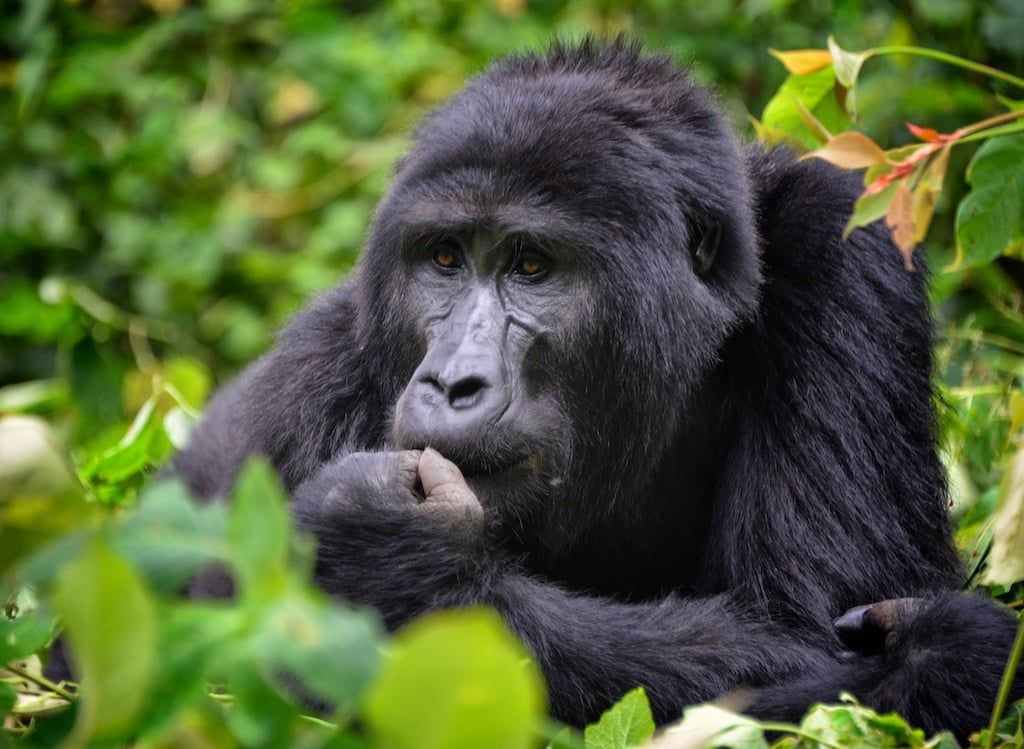
Choosing Your Sector: Buhoma vs Ruhija vs Rushaga vs Nkuringo
Pick the sector first, then the lodge inside it. Here's the whole decision in one view.
| Sector | Trek difficulty | Permits & experience | Access | Best for |
|---|---|---|---|---|
| Buhoma | Most forgiving; some treks done in 3–4 hours | Limited families, strong lodge scene | Best roads; ~95 km / 3 h from Kabale; Kihihi airstrip ~80 min | First-timers, older travellers, comfort |
| Ruhija | Moderate; high altitude, cooler | Quietest hub; Mubwindi Swamp birding | Off the Kabale road; Kihihi airstrip side | Birders, seekers of quiet |
| Rushaga | Moderate to tough | Most families, best availability; habituation experience | Via Kisoro; suits Kigali arrivals | Short notice, Rwanda combos, habituation |
| Nkuringo | Toughest; long ascents and descents | Fewer families; steepest hikes | ~105 km / 4 h from Kabale; via Kisoro | Fit hikers, Virunga views |
Buhoma: the forgiving north
Buhoma has the gentlest terrain and the deepest lodge bench in the park, which is why it's the default for first-time trekkers and older visitors. Some Buhoma treks wrap up by 11:00 am after three or four hours of walking. It's also the most developed base for logistics: the park headquarters sits here, the road from Kabale (95 km, about three hours) is the best of the four, and trekkers who want extra support can hire a porter for US$10–25 or, with advance notice, a sedan chair carried by four porters (roughly US$300–500). Buhoma Lodge and Sanctuary Gorilla Forest Camp sit inside the boundary; Bwindi Lodge and Mahogany Springs sit at the gate.
Ruhija: inside the park, among the birds
Ruhija is the only hub set within the park itself rather than on its edge, and at this elevation the mornings are cool and the traffic is thin. The draw is the Mubwindi Swamp trail, one of Africa's great bird walks: Bwindi records over 347 forest bird species, and the swamp is where you go for the African green broadbill, Grauer's swamp warbler and Shelley's crimson-wing. Lodging leans community-run midrange — Bakiga Lodge and Ruhija Gorilla Safari Lodge are the names that come up — and the sector sits conveniently on the Kabale side of the park, about 1.5–2 hours from Lake Bunyonyi.
Rushaga: permits, flexibility, habituation
Rushaga has more habituated gorilla families than any other sector, which translates into the best permit availability — often the only permits left for short-notice or peak-season trips. It also hosts the Gorilla Habituation Experience, a full day with researchers and a semi-habituated group for US$1,500, versus the standard one-hour trek. Ichumbi Gorilla Lodge is about a ten-minute walk from Rushaga Gate; Gorilla Safari Lodge sits roughly five minutes from the trekking point; Four Gorillas Lodge is the upscale pick. If you're flying into Kigali, this is your sector.
Nkuringo: the hard one, with the views
Nkuringo delivers the park's most demanding treks — long descents into valleys and climbs back out — and its most dramatic scenery, with ridge-top views over the canopy to the Virunga volcanoes on the Rwanda and DRC borders. Clouds Mountain Gorilla Lodge, the sector flagship at 2,100 m, is Uganda's highest lodge. Nkuringo Bwindi Gorilla Lodge is the midrange anchor. Book this sector only if your fitness is genuinely good; the reward is a combination of hard hiking, volcano panoramas and close encounters that regulars call unmatched.
Best Lodges by Budget: Luxury, Midrange & Community-Run
Rates below are operator-quoted, per person per night, mostly full board, and they move with the seasons — treat them as a ladder, not a price list. Across the whole park, accommodation runs from roughly US$80 to US$1,200+ per night. Six representative picks to orient you:
| Lodge | Sector | From (pp) | Band |
|---|---|---|---|
| Clouds Mountain Gorilla Lodge | Nkuringo | US$490 | Luxury |
| Bwindi Lodge | Buhoma | US$480 | Luxury |
| Buhoma Lodge | Buhoma | US$380 | Luxury |
| Buhoma Community Haven | Buhoma | US$216 | Midrange |
| Ichumbi Gorilla Lodge | Rushaga | US$180 | Midrange |
| Chameleon Hill Lodge | Lake Mutanda | US$125 | Budget |
Luxury: US$300 and up
The top of the market is genuinely good. Clouds Mountain Gorilla Lodge (Nkuringo, from US$490) pairs stone cottages with fireplaces and those volcano views from 2,100 m. Bwindi Lodge (Buhoma, from US$480) sits just outside Buhoma Gate; Buhoma Lodge (from US$380) is inside the boundary, two minutes' walk from the assembly point at headquarters. In Rushaga, Four Gorillas Lodge starts around US$350. Sanctuary Gorilla Forest Camp (Buhoma, from US$315) runs eight standing tents inside the park, minutes from the assembly point — monkeys pass through daily and gorillas occasionally cross the lawn. Mahogany Springs (about 1 km from Buhoma headquarters) and Nkuringo Bwindi Gorilla Lodge both open around US$300.
Midrange: roughly US$150–300
This is where most trekkers land, and the value is strong. Buhoma Community Haven (from US$216) and Engagi Lodge cover Buhoma; Ichumbi Gorilla Lodge (from US$180) is the Rushaga favourite, a short walk from the gate; Gorilla Mist Camp and Ruhija Gorilla Safari Lodge hold down other sectors. Bakiga Lodge, community-owned and perched above Ruhija, is the sector's best-known midrange name. At this tier expect en-suite cottages, full board and a bar with a view — not butler service.
Budget: under US$150
Cheaper beds cluster at the sector gates. Buhoma Community Rest Camp, Karungi Camp and Gorilla Bluff Lodge keep Buhoma affordable; Broadbill Forest Camp does the same at Ruhija (and puts you near the birding); Albertine Gorilla Campsite and other campsites take the floor lower still. Chameleon Hill Lodge, from US$125, is the budget band's wildcard — a colourful lodge on Lake Mutanda with Virunga views, about 45 minutes from the Nkuringo and Rushaga trailheads. Homestays around the park boundaries undercut everything. At this tier you get a bed, a hot shower most of the time and a short walk to briefing, which is all the trek really requires.
Community-run stays
Several properties channel your money somewhere specific. Ride 4 a Woman, in Buhoma, funds employment and training for local women; Bakiga Lodge is community-owned; Buhoma Community Haven feeds park-edge households. Since Bwindi is surrounded by one of tropical Africa's densest rural populations, and gorilla tourism revenue is what pays for the forest's protection, where your nightly rate lands is worth a moment's thought. These lodges are also simply good value — community-run rarely means rough.
What each tier actually buys
Luxury gets you fireplaces, hot-water bottles in the bed, a post-trek massage and guided walks from the doorstep. Midrange gets you a comfortable cottage, dinner and a deck with hornbills and turacos working the trees. Budget gets you a banda, breakfast before briefing and a five-minute walk to the trailhead. The one thing money can't buy here is the gorillas — a US$800 permit buys the same hour whatever you paid for the bed.
Staying Inside vs Outside the Park: Gates, Trailheads & Lakeside Bases
No, you don't need a lodge at the gate. What matters is minutes to your trailhead, not the park fence. Only a handful of properties sit inside the boundary — Buhoma Lodge and Sanctuary Gorilla Forest Camp in Buhoma — and inside-park status is a nicety, not a requirement. Mahogany Springs is roughly 1 km from Buhoma headquarters; Ichumbi is a ten-minute walk from Rushaga Gate; Gorilla Safari Lodge is five minutes from the Rushaga trekking point. Anywhere within about half an hour of your briefing point is a sensible base.
Beyond that radius, you're trading sleep for scenery — sometimes a good trade. Two lakes make it worth considering.
Lake Mutanda: the Mgahinga-combo base
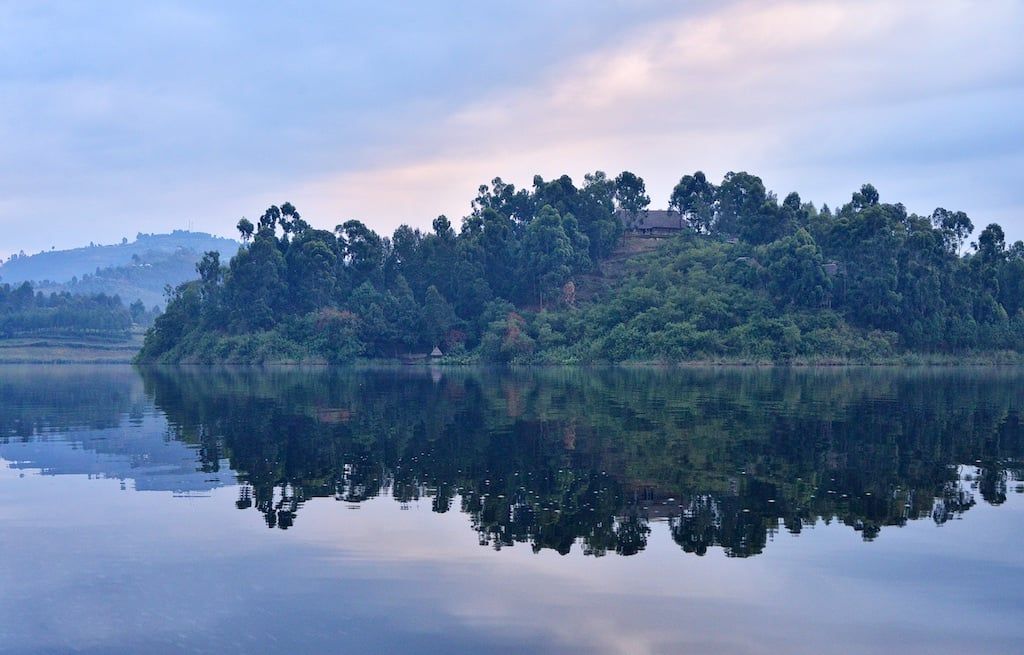
Mutanda Lake Resort stands on a wooded peninsula about 20 km south of Rushaga — at least an hour's drive to the trailhead, so expect an early alarm on trek day. The payoff: it sits roughly halfway between Bwindi and Mgahinga Gorilla National Park, where golden monkey tracking costs US$60. If your itinerary pairs gorillas with golden monkeys, a Mutanda base (Mutanda Lake Resort from US$155 B&B, Chameleon Hill from US$125) saves a relocation. If it doesn't, stay in your sector and sleep in.
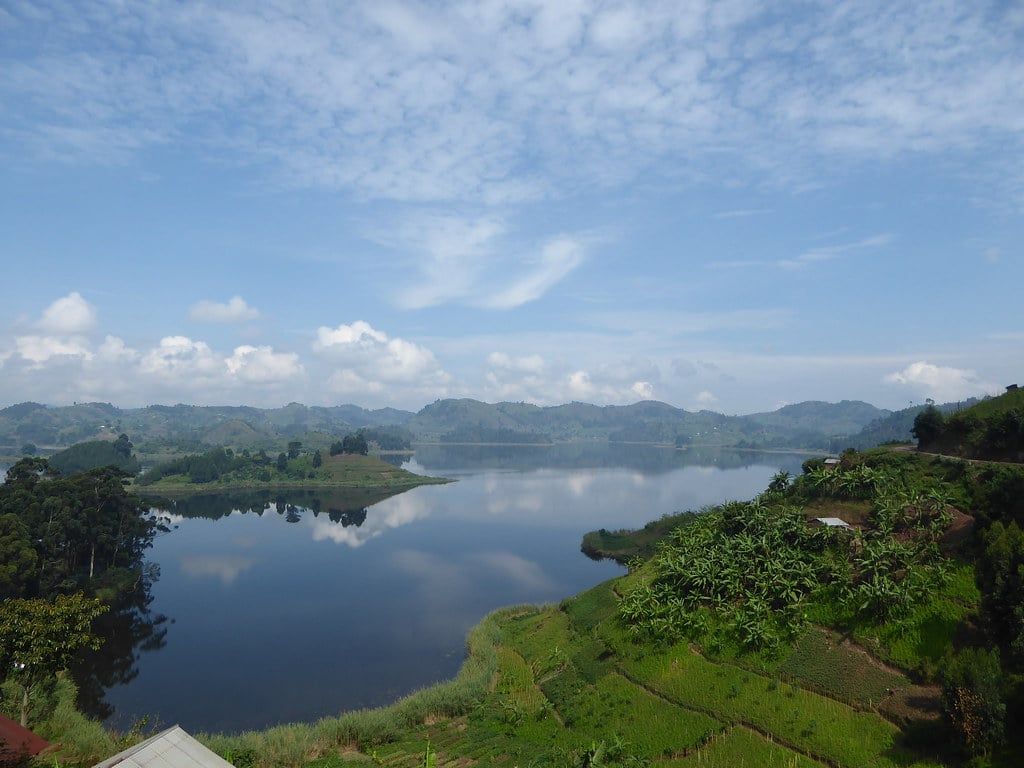
Lake Bunyonyi: the wind-down
Bunyonyi, an island-dotted highland lake about 48 km (1.5–2 hours) from Ruhija, is the classic post-trek retreat — boat rides among 29 islands, kayaking, malaria-free high country. It belongs after the trek, not before. Anyone who hates early drives should also skip the Mutanda option and book within walking distance of their gate.
Getting to Your Lodge: Routes, Airfields & Drive Times
Your arrival route should shape your sector before you've booked either. Full transport options and routes are covered separately; the short version, matched to beds:
By road from Kampala/Entebbe
It's 480–550 km and 8–10 hours via Masaka, Mbarara and Kabale — the tarmac is good, then the sector roads turn to murram. From Kabale it's about 95 km (three hours) to Buhoma and 105 km (four hours) to Nkuringo. Take a 4WD, especially in the rains, and treat the drive as a full travelling day.
By road from Kigali
Three to four hours via the Katuna/Gatuna border (through Kabale, for Buhoma and Ruhija) or the Cyanika border (through Kisoro, for Rushaga and Nkuringo). This is the popular time-saving route, and it's the strongest argument for booking a southern-sector lodge: land in Kigali, cross, sleep near your trailhead, trek the next morning.
By air
Scheduled light aircraft (Aerolink, Bar Aviation) fly Entebbe to two airstrips. Kihihi serves the northern sectors — about an 80-minute drive to Buhoma gate. Kisoro serves Rushaga and Nkuringo, a winding 35 km road of one to 1.5 hours to Nkuringo. One-way fares start around US$333, and flying one direction saves nearly a full day of driving. Book early for June–August.
Circuit logic
Bwindi sits inside a classic safari circuit: Queen Elizabeth National Park is 135 km away (the Ishasha sector, with its tree-climbing lions, is just 64 km / 2–3 hours from Buhoma), and Kibale's chimpanzees are 103 km beyond that. If you're combining parks, Buhoma is the natural Bwindi base — it's the northernmost sector and the one pointing at the rest of Uganda. Southerners heading on to Mgahinga or Rwanda should finish at Rushaga or Nkuringo.
Booking Tips: Permits, Timing & What to Check Before You Pay
Book the permit first, always. The permit fixes the sector; the sector fixes the lodge. Permits (US$800 foreign non-resident, US$1,500 for habituation) go through the UWA reservations office in Kampala or licensed operators, and June–August sells out earliest — book months ahead, and don't shop for beds until the permit is confirmed. The park hours and entry fees page has the full tariff breakdown.
Timing cuts both ways. Trailhead lodges sell out early in the dry seasons (June–August, December–February). The wet months — April, May and November — bring discounted permits, typically around US$200 cheaper, and softer lodge rates, at the cost of muddy trails and slow murram roads; our best time to visit guide weighs the trade-off in full. For context, a typical trip budget runs the US$800 permit plus roughly US$300–500 for two nights' accommodation, US$250–400 for shared-vehicle transport and US$40–50 for porters and tips.
Self-booking works if you're methodical; most disasters come from permits, sectors, transfers and beds that don't align, which is what a specialist operator exists to prevent — gorilla trekking tours bundle the permit, a sector-matched lodge and the transfers, and the full Bwindi tour range covers longer circuits. Whichever route you take, get these six things in writing before paying:
- The lodge's sector, and that it matches your permit
- Drive or walk time from lodge to briefing point
- Board basis — full board or B&B — and what it covers
- A packed breakfast on trek morning, if briefing beats the kitchen
- Whether lodge transfers (airstrip, gate) are included or extra
- Cancellation terms, for both permit and room
FAQs About Bwindi Accommodation
Can I stay in one sector of Bwindi and trek in another?
Technically yes, practically no. Permits are issued for a specific sector, and the sectors sit hours apart on mountain roads — a mismatched lodge means a pre-dawn transfer and a briefing you risk missing. Book accommodation in, or beside, the same sector as your permit.
How many nights should I book in Bwindi?
Two is the bare minimum — arrive, trek, leave — because you must overnight near the trailhead before the early briefing. Three is ideal: a buffer for slow roads plus an afternoon to actually enjoy the lodge.
How much does accommodation in Bwindi cost?
Across the park, roughly US$80 to US$1,200+ per night depending on tier. Indicative per-person full-board rates run from about US$125 at Chameleon Hill to US$490 at Clouds Mountain Gorilla Lodge, with most midrange options between US$150 and US$300.
How far is Bwindi from Kampala or Entebbe?
About 480–550 km, or 8–10 hours by road via Masaka, Mbarara and Kabale, with 4WD recommended on the final murram stretches. Scheduled flights from Entebbe land at Kihihi (about 80 minutes' drive to Buhoma) or Kisoro (1–1.5 hours to the southern sectors), from roughly US$333 one-way.
Can I fly into Kigali and stay in Bwindi?
Yes, and it's the popular time-saving route — 3–4 hours' drive via the Katuna or Cyanika border posts. The southern Rushaga and Nkuringo sectors are the convenient picks for a Kigali arrival, since Kisoro sits close to both.
Which Bwindi sector is best for first-time trekkers or older travellers?
Buhoma. It has the most forgiving terrain — some treks finish by 11:00 am after three or four hours — the best road access and the deepest lodge bench. Porters (US$10–25) and sedan chairs (about US$300–500, booked ahead) are available. Nkuringo is the toughest sector; save it for genuinely fit hikers.
Are Bwindi lodges safe?
Yes. Lodges are well managed, rangers operate across the conservation area, and staff are practiced at wildlife passing through camp — gorillas occasionally wander across lawns at the in-park properties. The real risks here are logistical, not criminal.
Should I book my Bwindi lodge myself or through an operator?
You can self-book once your permit is secured and you understand the sector match. Most problems come from permits, sectors, transfers and accommodation failing to line up, which is what operators prevent. Permits cost US$800 (US$1,500 for habituation) and should be booked months ahead.