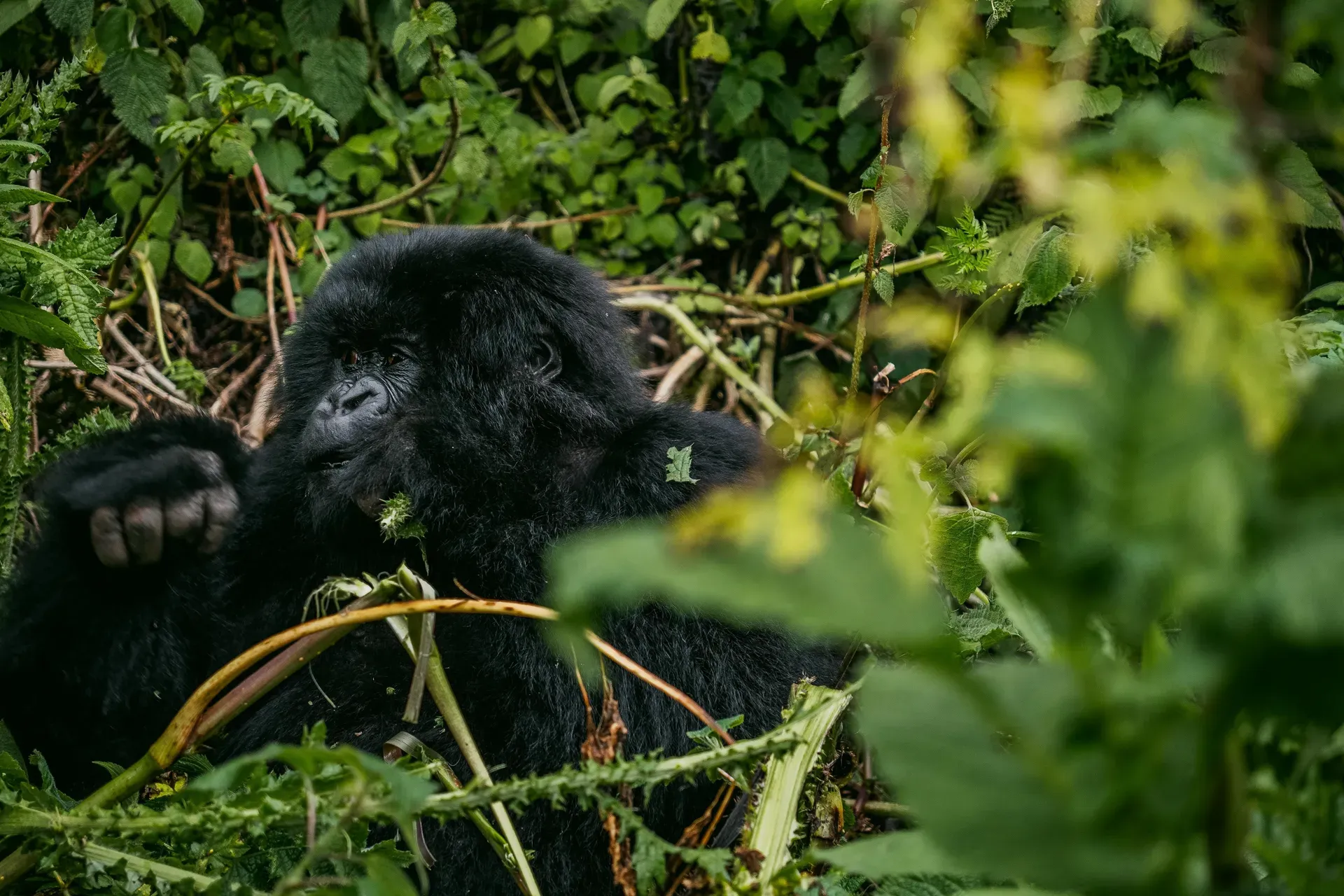
Bwindi Impenetrable National Park is a 331 km² patch of ancient rainforest in Uganda's south-western highlands, home to roughly 459 mountain gorillas — nearly half of all that survive on Earth.
Roughly 459 mountain gorillas live in Bwindi Impenetrable National Park — almost half of all that remain on Earth. The park sits in the Kigezi Highlands of south-west Uganda, on the eastern edge of the Albertine Rift, spread across steep ridges and narrow valleys in the Kanungu, Kabale and Kisoro districts. Getting to them takes work: treks last two to eight hours through dense, often muddy forest, and end with exactly one hour in the company of a habituated gorilla family at a minimum distance of ten metres.
The forest itself is the other reason to come. Bwindi has East Africa's richest tree flora — more than 200 species, ten found nowhere else — plus 202 butterfly species and some 347 forest birds. Botanists believe it's a Pleistocene refugium, a forest that survived the last ice age while the surrounding region dried out. Its vegetation is over 25,000 years old, a remnant of forest that once covered much of western Uganda, Rwanda, Burundi and eastern DRC.
UNESCO inscribed Bwindi on the World Heritage List in 1994, and the Uganda Wildlife Authority manages it today across four trekking sectors: Buhoma in the north, Ruhija in the east, and Rushaga and Nkuringo in the south. Permits cost US$800 for foreign non-residents, cap groups at eight visitors, and sell out months ahead in the June–August peak. Beyond the gorillas, the park offers birding, guided forest walks and cultural experiences with the Batwa people, who lived in this forest as hunter-gatherers until the park's creation evicted them in 1991.
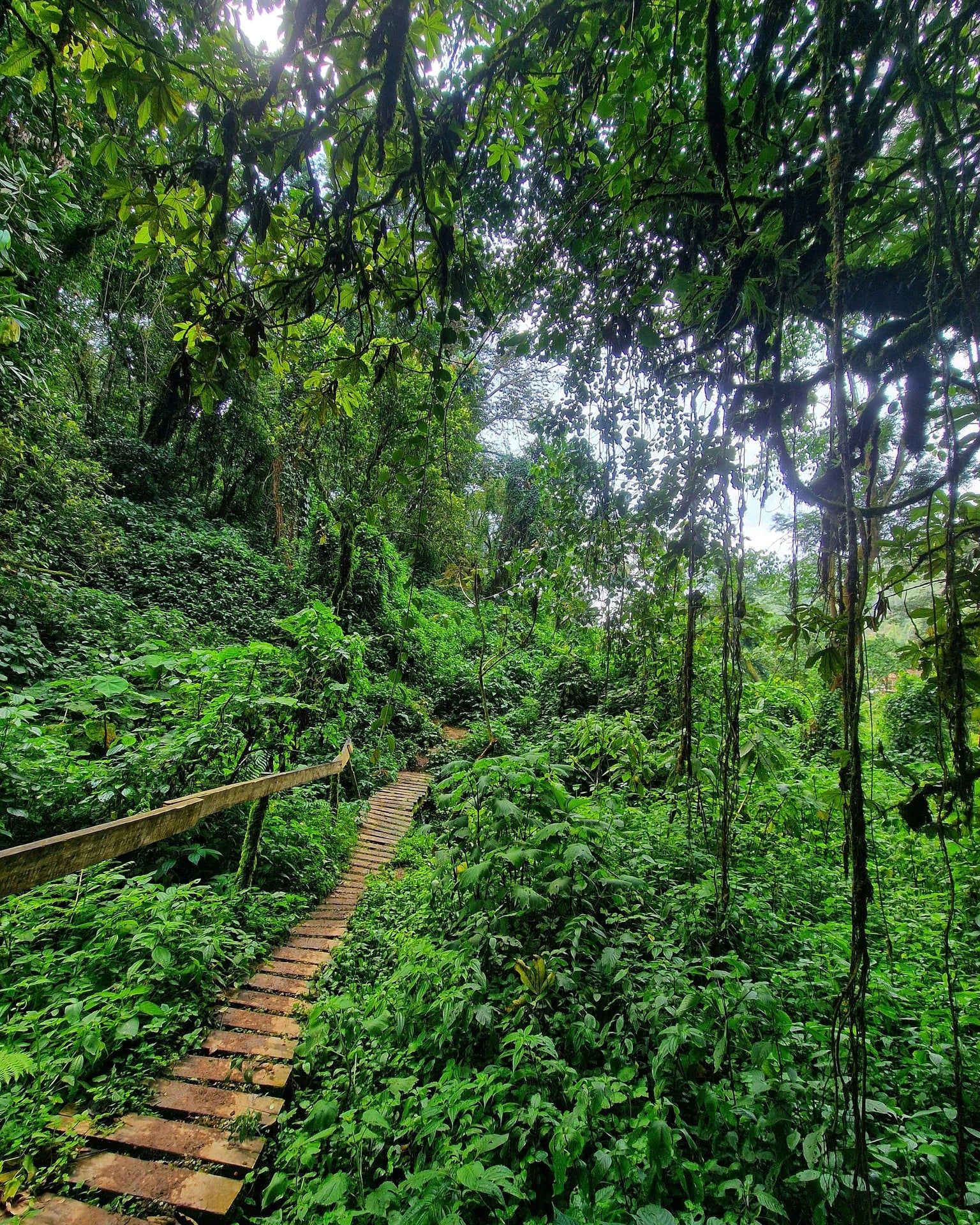
Bwindi's written history begins in 1932, when the British colonial administration gazetted two blocks of forest as the Kasatora and Kayonza Crown Forest Reserves — 20,700 hectares in total, set aside for timber. Ten years later, in 1942, the two reserves were combined and enlarged into the Impenetrable Central Crown Forest Reserve, 29,800 hectares. The name stuck. Nobody who has fought through its nettle-filled undergrowth on a wet morning questions it.
In 1964 the reserve was declared an animal sanctuary, with mountain gorillas the species to be shielded. That status held for nearly three decades. Then, in 1991, the Ugandan government converted the forest — along with Mgahinga and Rwenzori — into Bwindi Impenetrable National Park under Statutory Instrument No. 3 of 1992. UNESCO followed in 1994, inscribing it as a natural World Heritage Site on the strength of its biodiversity.
The 1991 gazettement had a human cost. The Batwa, hunter-gatherers who had lived in the forest for centuries, were evicted and left with no land of their own. They now live in communities outside the park boundary and share their forest knowledge through cultural tourism — the Batwa Trail Experience, village walks and the Buniga Forest Walk near Buhoma and Nkuringo.
Conservation itself has a measurable record here. A 2018 census counted 459 gorillas in the Bwindi–Sarambwe ecosystem, up from earlier counts, and the global mountain gorilla population reached 1,063 by 2024 — up from 1,004 in 2018. It's the only great ape whose numbers are rising. Management passed from Uganda National Parks to the Uganda Wildlife Authority, which now runs Bwindi together with Mgahinga as the Bwindi-Mgahinga Conservation Area. Around 20 gorilla families are habituated across the four sectors, with permits limited to eight visitors per family per day.
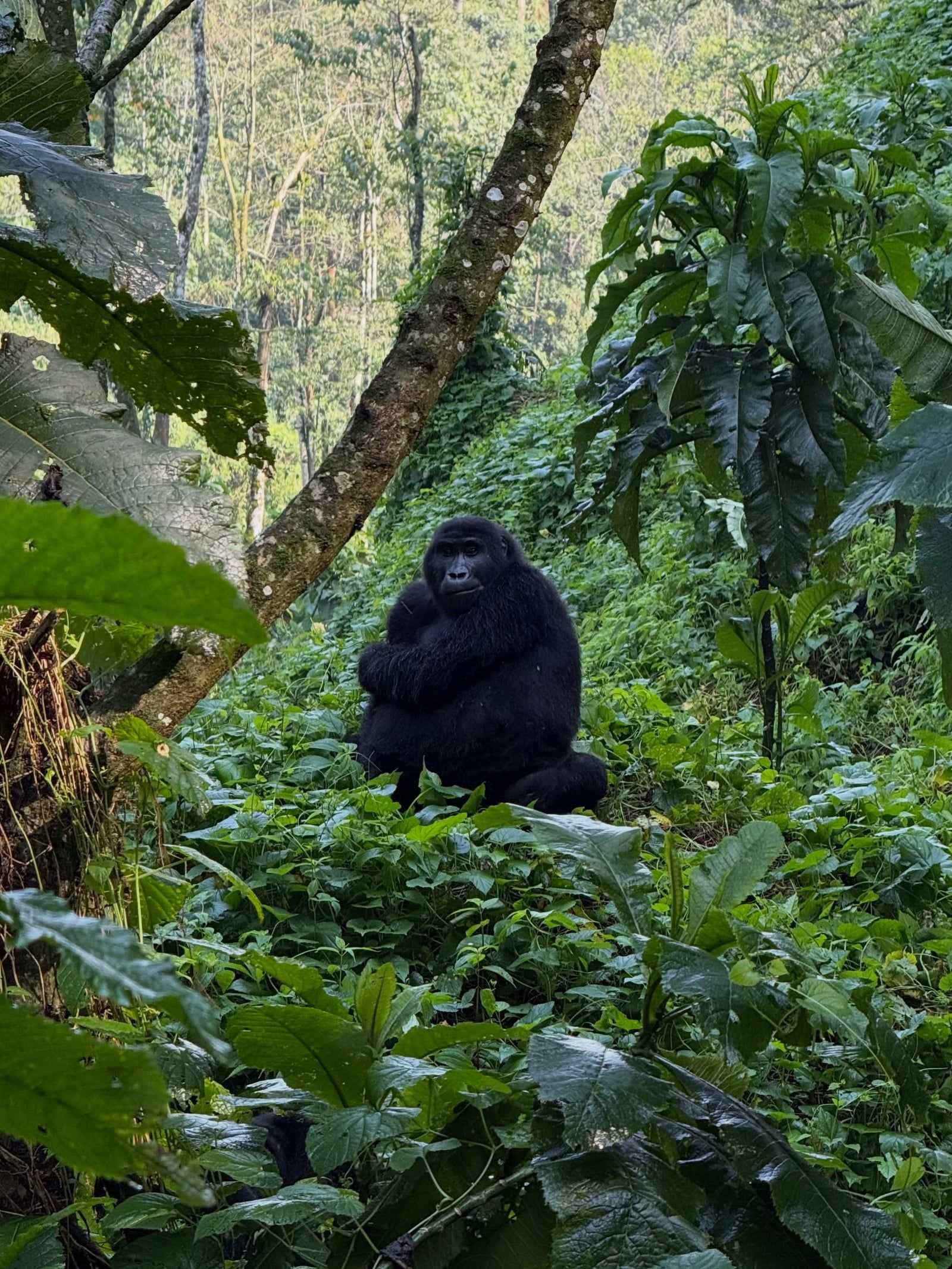
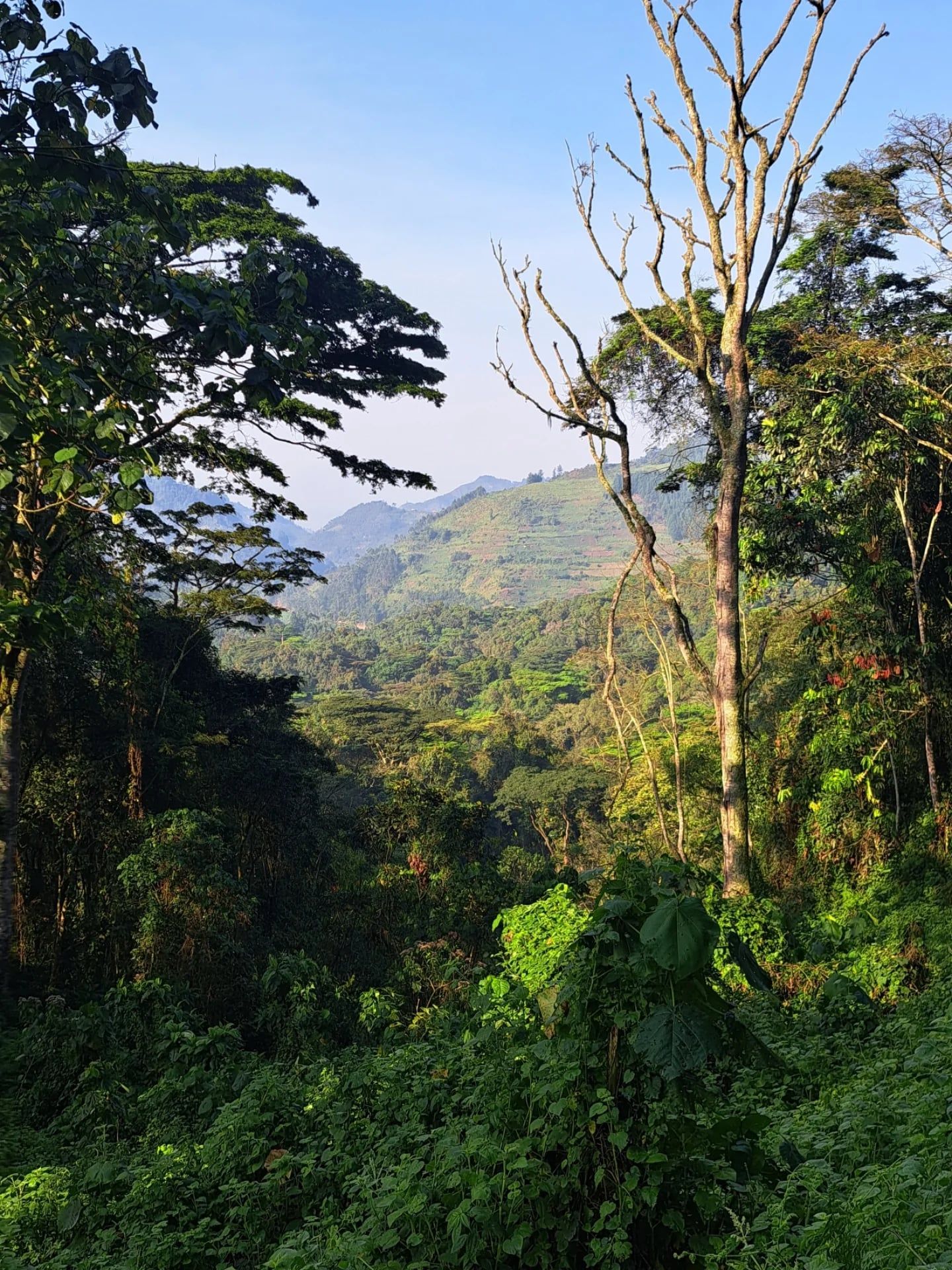
Think steep, not flat. Bwindi's 32,092 hectares climb from 1,160 m to 2,607 m through a spine of rugged ridges and deep, narrow valleys, taking roughly 1,500 mm of rain a year. That elevation span is unusual — the Afromontane forest runs continuously from the lowland belt right up into the montane zone, which is part of why so many species packed into one place. Habitats shift as you climb: lowland forest with Guineo-Congolian species, including the endangered brown mahogany, gives way to bamboo zones and high montane vegetation near the tops.
The park is also a water source. Five rivers rise inside it, all flowing toward Lake Edward. To the south-west, Bwindi borders the DRC's small Sarambwe forest — about 900 hectares — and gorillas cross between the two, which is why census figures count them as one ecosystem.
The four trekking sectors differ enough to change your whole trip. Buhoma, in the north, has the gentlest trails and the most lodges; first-time trekkers and seniors should start here. Ruhija, the highest sector, is the birder's pick — the Mubwindi Swamp trail is your best shot at the African green broadbill. Rushaga holds the most gorilla families and hosts the US$1,500 habituation experience. Nkuringo serves up the steepest hikes and the best views, with the Virunga volcanoes of the Rwanda–DRC border looming over the canopy. Permits are tied to a single sector, and driving between them can take hours, so book your lodge near the trailhead printed on your permit.
For centuries before the park existed, the Batwa lived inside this forest — hunting with nets, gathering honey, harvesting medicinal plants, and moving camp with the seasons. Gazettement in 1991 ended that. The Batwa were evicted from the forest with little compensation and moved to communities outside the boundary, where they remain one of Uganda's most marginalised groups. What tourism now offers is partial restitution: the Batwa Trail Experience (US$40, book ahead) is led by Batwa guides themselves, who demonstrate fire-making, plant medicine and honey collection on the way to Garama cave, and the fees go to their community.
The forest matters just as much to the Bakiga farmers who farm its edges — at over 350 people per km², some of the densest rural population in tropical Africa. A share of gorilla permit revenue and community levies flows to these neighbours, and porter fees (US$10–25 a day) go directly to local families, including reformed poachers. The Buhoma Community Walk, past Mukono Primary School, a traditional healer's homestead and banana-beer brewers, makes the same connection visible.
The deal is straightforward: people who benefit from living gorillas protect them. That's why the census numbers keep climbing.
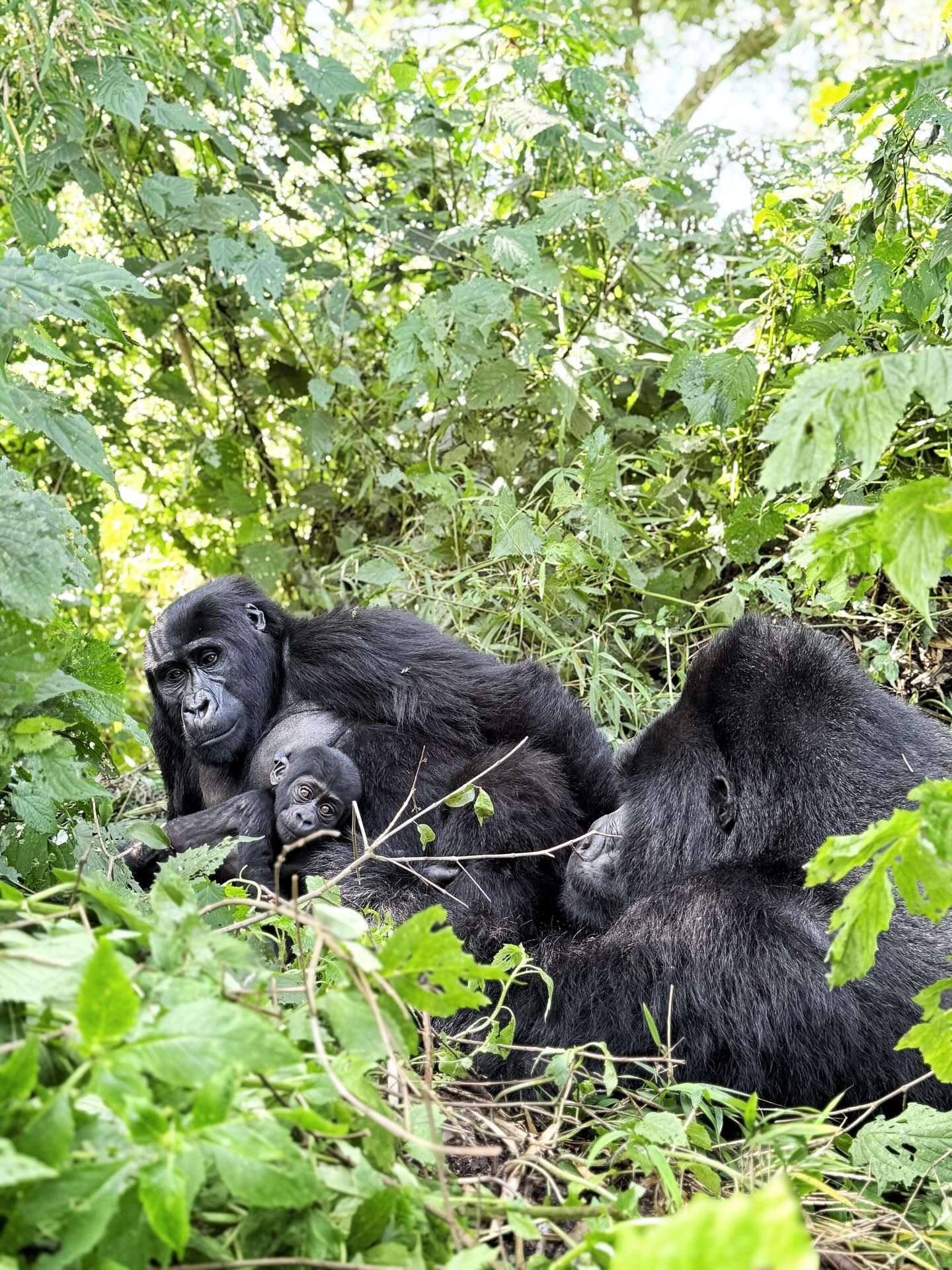
Bwindi's roughly 459 mountain gorillas represent almost half of the entire global population, which stood at 1,063 in 2024. Mountain gorillas are the only great ape whose numbers are increasing.
Bwindi is believed to be a Pleistocene refugium — a forest that survived the last ice age while surrounding forests disappeared. Its vegetation is more than 25,000 years old.
The park records 202 butterfly species, about 84% of all butterfly species found in Uganda.
Visitors who can't hike can still reach the gorillas: a sedan chair carried by four trained porters costs around US$300–500 and makes Bwindi one of the few wild-gorilla destinations accessible without walking.
UNESCO inscribed Bwindi as a natural World Heritage Site in 1994, just three years after it became a national park. It's one of only a handful of natural World Heritage Sites in Uganda, alongside Rwenzori Mountains.
Bwindi is the source of five rivers that flow toward Lake Edward, making it a water catchment for communities far beyond its boundary.
Each habituated gorilla family receives a maximum of eight tourists per day, for one hour. With about 20 habituated families, daily gorilla permits across all four sectors are strictly finite — they sell out months ahead in high season.
Gorilla trekking. The park protects roughly 459 mountain gorillas — almost half of all that remain on Earth — and permits eight visitors per habituated family per day for one regulated hour with the animals. It's also a UNESCO World Heritage Site (inscribed 1994) with East Africa's richest tree flora and 347+ forest bird species.
The name comes from the forest itself: dense, tangle-undergrowth montane rainforest laced with stinging nettles and thorny vines, growing across steep ridges between 1,160 m and 2,607 m. Trekkers regularly spend hours cutting through vegetation the rangers clear with machetes. The name was formalised in 1942, when the Impenetrable Central Crown Forest Reserve was created.
The vegetation is more than 25,000 years old. Botanists believe Bwindi is a Pleistocene refugium — a forest patch that survived the last ice age when the surrounding region dried out, which explains why it holds species found nowhere else, including ten endemic trees.
1991, under Statutory Instrument No. 3 of 1992, alongside Mgahinga and Rwenzori. Before that it had been a crown forest reserve since 1932 and an animal sanctuary since 1964. UNESCO added it to the World Heritage List in 1994.
The Batwa, a hunter-gatherer people who had occupied the forest for centuries. They were evicted when the park was gazetted in 1991 and now live in communities outside the boundary. Their forest knowledge survives through the Batwa Trail Experience and village walks, which they lead themselves.
The 2018 census counted 459 individuals in the Bwindi–Sarambwe ecosystem (36 groups plus 16 solitary males). Globally, mountain gorillas numbered 1,063 as of 2024, up from 1,004 in 2018 — the only great ape with a rising population.
Buhoma (north) has the easiest trails and most lodges; Ruhija (east) is the highest and best for birding, especially the Mubwindi Swamp trail; Rushaga (south) has the most gorilla families and hosts the habituation experience; Nkuringo (south-west) has the steepest hikes and the best Virunga volcano views. Permits are tied to one sector, so stay near the trailhead on your permit.
Registration and briefing happen at the sector trailhead by 7:30–8:00 am, and groups set off around 8:30 am with armed rangers. The hike to the gorillas takes two to eight hours depending on where the family is feeding that day. Once found, you spend exactly one hour at a minimum distance of ten metres — no eating, drinking, smoking or flash photography.
No. The park offers day nature walks (US$40 for foreign non-residents), long sector-to-sector hikes like the Buhoma–Nkuringo traverse (US$60), and serious birding — 22 of the Albertine Rift's 36 montane forest endemics occur here. The Ivi River walks in the south-east are the quietest option, with monkeys, duikers and butterflies and few other visitors.
Under the UWA tariff running July 2024 to June 2026, a permit costs US$800 for foreign non-residents, US$700 for foreign residents, US$500 for Rest of Africa and UGX 300,000 for East African citizens. It covers that day's park entrance, the guide fee, a community contribution and a tracking certificate. The Gorilla Habituation Experience costs US$1,500 and takes most of a full day.
Browse verified tours with free cancellation and instant confirmation.
Find Tours